If you are trying to figure out what “fits” in Holmdel, you are not alone. This market is not defined by one look or one type of neighborhood, and that can make your home search feel both exciting and a little confusing. The good news is that once you understand how Holmdel’s housing patterns break down, it becomes much easier to narrow your options by lifestyle, lot size, and setting. Let’s dive in.
How Holmdel housing is laid out
Holmdel is a predominantly owner-occupied community, with 91.6% of housing units owner-occupied. The median value of owner-occupied homes is $843,000, and median household income is $165,013, which helps explain why many buyers are looking closely at long-term fit, not just square footage.
One of the biggest factors shaping the township is geography. Holmdel’s official overview notes that the Garden State Parkway divides the town in half, with a denser north side that includes hundreds of condos and Route 35 shopping, and a more rural south side that is dominated by single-family homes on larger parcels.
That split matters when you start comparing neighborhoods. In Holmdel, buyers often end up choosing between lower-maintenance attached living, more traditional detached-home neighborhoods, and larger-lot estate-style settings with a more private feel.
North side vs south side
If you want a quick way to understand Holmdel, start with the north-south difference. The north side generally feels more connected to commercial corridors and attached housing options, while the south side tends to feel more open, less dense, and more centered on detached homes.
That does not mean every street follows a simple formula. Holmdel’s housing pattern is shaped heavily by zoning district and land-use setting, so one area may offer easier access to conveniences, while another offers more land, more privacy, and a different streetscape.
For many buyers, this becomes a lifestyle choice. If you want lower exterior maintenance and a location near Route 35 conveniences, the north side often deserves a closer look. If you want a larger homesite and a more rural or estate-like setting, the south side may be a better match.
Traditional detached-home areas
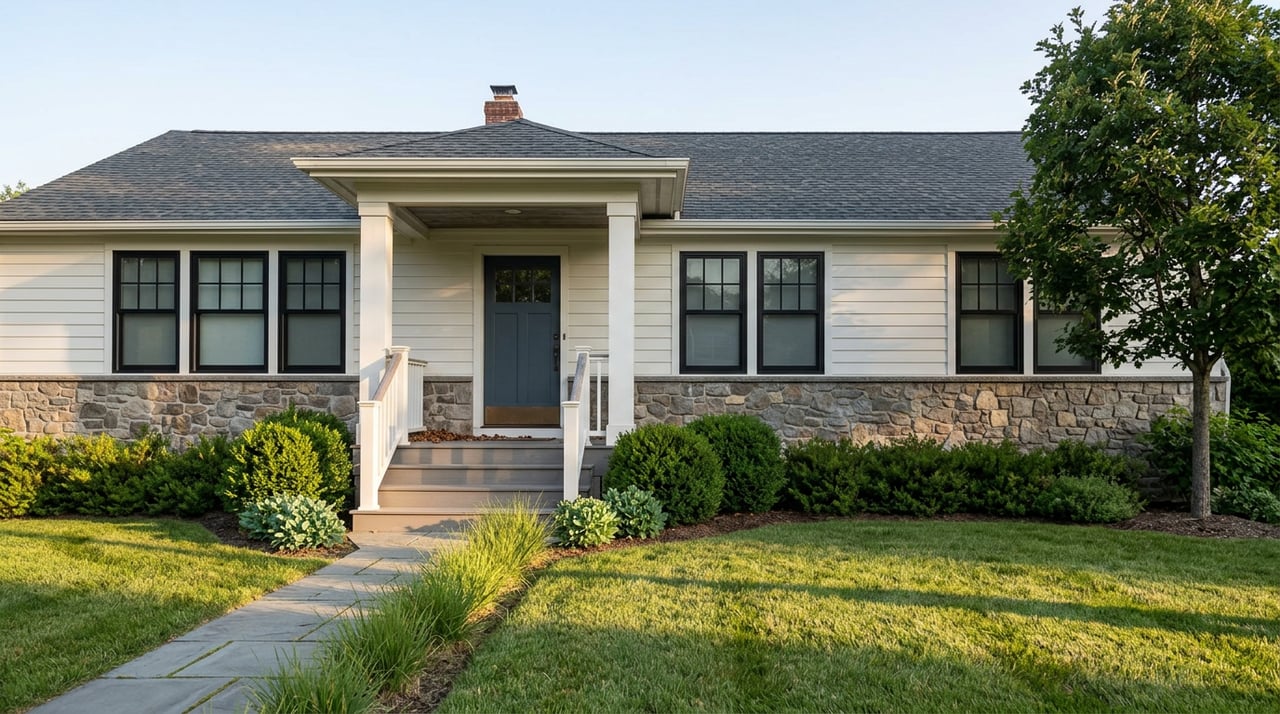
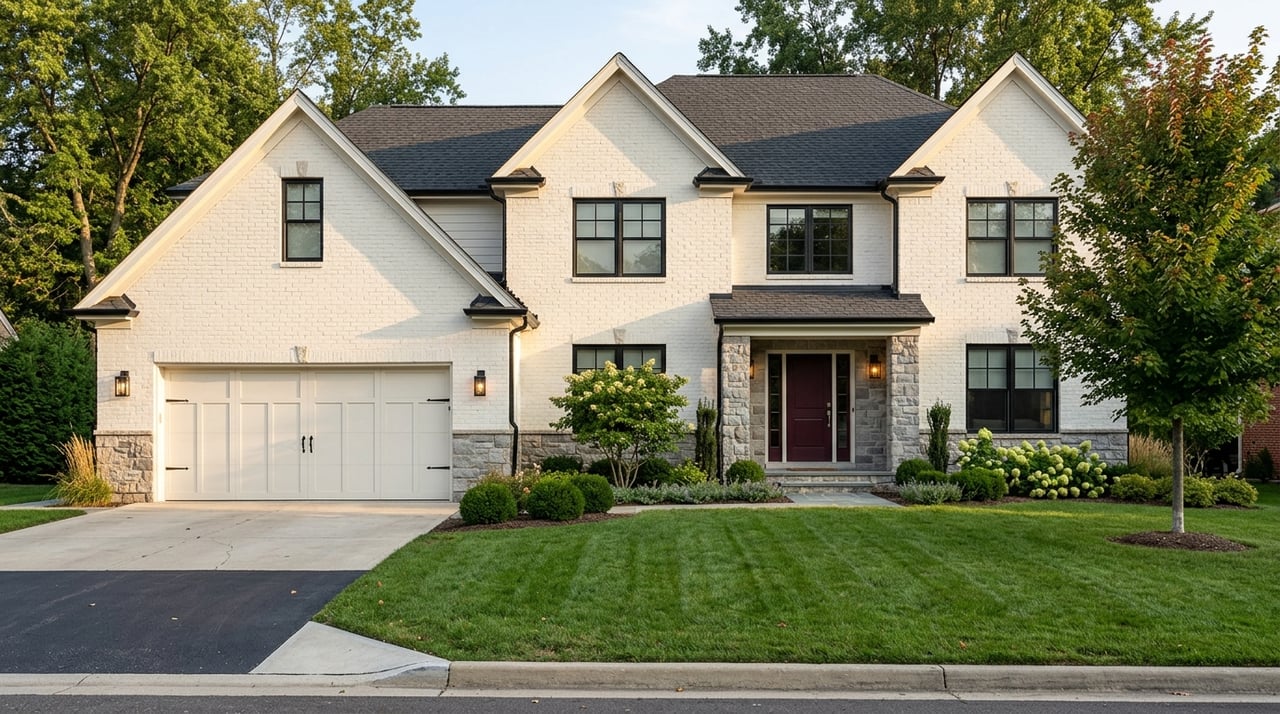
Holmdel has several areas where detached homes are the defining style. These areas do not all look exactly the same, but they tend to offer the classic single-family neighborhood feel many buyers picture when they think about suburban Monmouth County living.
Village-adjacent traditional character
The R-2H district is intended as a low-density zone in the southern part of Holmdel near the historic hamlet of Holmdel Village. Township rules for village character state that new or altered buildings should, where practical, reflect architectural styles popular in 18th- and 19th-century northeastern small towns, including Colonial, Greek Revival, and Victorian.
If you are drawn to older, more traditional home character, this is one of the clearest style references in town. It is also one of the reasons some buyers associate this part of Holmdel with a more classic, village-edge setting rather than a uniform suburban subdivision look.
Detached neighborhoods with varied lot sizes
A broader group of residential districts includes R-11, R-15, R-30, R-30SC, and R-TH. According to the zoning code, these districts are designed to provide a wider range of lot sizes in areas that can be served by water and sewer and are closer to major highway access.
For nonclustered homes, lot sizes range from 11,000 square feet in R-11 to 30,000 square feet in R-30. R-15 and R-TH use 15,000-square-foot lots for nonclustered homes, which gives buyers a useful clue about how neighborhood spacing may differ from one area to another.
In practical terms, these districts can appeal to buyers who want detached living but do not necessarily need estate-scale acreage. They can offer a balance between yard space, neighborhood structure, and access to major roads.
Estate-style and conservation settings
If privacy, open views, and a more spacious setting are high on your list, Holmdel’s low-density conservation districts are worth understanding. These are the parts of town most associated with larger lots and a more rural residential feel.
Larger-lot conservation districts
The R-40A and R-40B districts are intended to match existing low-density development and preserve Holmdel’s undeveloped rural character. The township code notes that R-40B is even lower density and may be better suited to septic-sensitive soils.
In R-40A, nonclustered single-family lots start at 43,000 square feet. That larger minimum lot size helps explain why some parts of Holmdel feel more open and estate-like compared with the smaller-lot residential districts.
Rural conservation and estate feel
The R-4R Rural Conservation District takes the preservation approach even further. Its stated purposes include protecting natural systems, scenic resources, wetlands, historic sites, and open-space views, and clustered development in this district must provide at least 30% open space.
The district allows rural estate houses, green estate houses, and individual estate houses. It also requires each principal building to have its own subsurface septic facility rather than public sewer, which is an important detail for buyers comparing infrastructure and property setting.
For many buyers, this is the part of Holmdel most likely to feel like an estate street or semi-rural residential pocket. If you want land, privacy, and a setting shaped by preservation goals, this is often the strongest fit.
Hamlet estate planning areas
Holmdel’s R-4H Hamblet Estate District is also tied closely to preservation and planned siting. The code allows hamlet estate houses only in locations shown on the Master Plan, along with parks, preservation areas, farms, and municipal uses.
This district also emphasizes preserving wetlands, steep slopes, forested areas, historic sites, and scenic views. For buyers, that means the home style and placement are tied not just to lot size, but also to the township’s broader land-preservation goals.
Townhomes, condos, and attached living
Attached housing exists in Holmdel, but it is more limited and more concentrated than detached housing. If you are looking for lower-maintenance living, it helps to know that these options are not evenly spread throughout town.
The zoning code permits townhouses in the R-11, R-30, R-30SC, and R-TH districts under specific conditions. It also contemplates senior citizen housing in the R-TH district, which adds another layer to the range of attached-home options that may exist in certain locations.
The township’s own overview says the north side of Holmdel contains hundreds of condos. That reinforces the broader pattern that attached housing is most concentrated north of the Garden State Parkway and along the Route 35 corridor.
For buyers who want less exterior upkeep, easier access to shopping, or a more compact residential setting, these pockets can be a strong match. They offer a different lifestyle than the township’s larger-lot southern areas, and that difference is worth weighing early in your search.
What newer construction usually looks like
In some towns, newer construction mainly means large new subdivisions. Holmdel’s current housing pipeline suggests a different pattern.
According to the township’s 2025 Housing Element and Fair Share Plan, current examples of new housing include a 23 Main Street age-restricted community with senior for-sale townhouse units plus rental and assisted-living components, and a proposed municipally sponsored 100% affordable project on Route 35. That suggests newer housing in Holmdel often comes through redevelopment, planned communities, mixed-use reuse, or age-restricted development rather than large greenfield subdivision building.
If you are specifically searching for newer homes, it is smart to look beyond the idea of a typical brand-new subdivision. In Holmdel, newer opportunities may be more targeted and more concentrated in planned or redevelopment settings.
How to match home type to lifestyle
The best Holmdel home for you depends less on one “best” neighborhood style and more on how you want to live day to day. A clear framework can make the search much easier.
You may prefer detached traditional areas if you want:
- A classic single-family neighborhood feel
- A range of lot sizes rather than estate-scale parcels
- Access to areas served by water and sewer
- Proximity to major highway access
You may prefer conservation or estate-style areas if you want:
- More privacy
- Larger lots
- A rural or semi-rural setting
- Open-space views and lower-density surroundings
You may prefer condos or townhomes if you want:
- Lower-maintenance living
- A more compact residential setting
- Easier access to Route 35 conveniences
- An attached-home option in a town that is otherwise largely detached housing
Why zoning matters in Holmdel
In Holmdel, zoning is one of the best tools for understanding what an area is likely to feel like. It can help explain why one part of town feels more compact and convenience-oriented, while another feels more private and spread out.
It also answers some of the most common buyer questions. The most traditional-looking homes are generally tied to the village-edge and historic-residential areas, townhomes and condos are concentrated in attached-housing districts and north-side corridors, and the biggest-lot settings are found in the conservation and estate districts.
The township’s housing plan also notes that a senior citizen may live in a single-family dwelling with extended family in Holmdel’s residential zoning districts. For some buyers planning for multigenerational living, that is another helpful piece of context to discuss as part of a broader home search.
Final thoughts on Holmdel home styles
Holmdel is not a one-note housing market, and that is part of its appeal. You can find everything from traditional detached-home areas to larger-lot conservation settings to more limited pockets of attached living, but each comes with a different rhythm and set of tradeoffs.
If you start your search by focusing on lot size, maintenance level, privacy, and proximity to conveniences, you will get clearer answers faster. And when you understand how the township’s north-south geography and zoning framework shape those choices, you can search with much more confidence.
If you want help narrowing down which part of Holmdel fits your goals, Doreen DeMarco can help you compare options with clear, practical local guidance.
FAQs
What types of homes are most common in Holmdel?
- Holmdel is primarily made up of owner-occupied housing, and detached single-family homes are the dominant housing type, with attached homes and condos more limited and concentrated mainly on the north side.
Where are condos and townhomes usually located in Holmdel?
- Condos and other attached-home options are generally concentrated north of the Garden State Parkway and along the Route 35 corridor, where the township says there are hundreds of condos.
Which parts of Holmdel feel the most private?
- The low-density conservation and estate districts, including areas such as R-40A, R-40B, R-4R, and R-4H, are the parts of Holmdel most associated with larger lots, lower density, and a more private setting.
What part of Holmdel has the most traditional home character?
- The southern area near Holmdel Village, especially the R-2H district, is most closely associated with traditional detached-home character and design references such as Colonial, Greek Revival, and Victorian styles.
Is newer construction common in Holmdel?
- Newer housing exists in Holmdel, but current examples in the township’s housing plan suggest it often appears through redevelopment, planned communities, mixed-use reuse, or age-restricted development rather than large new subdivisions.
Does Holmdel offer options for multigenerational living?
- The township’s housing plan notes that a senior citizen may live in a single-family dwelling with extended family in Holmdel’s residential zoning districts, which may be useful context for buyers considering multigenerational living.