"Look at North Middletown, their levee was built in the early 1970s and it still protected that neighborhood completely, even during Hurricanes Irene and Sandy."
That's Middletown Township Administrator Tony Mercantante, talking to the Two River Times about a levee that has quietly done its job for more than fifty years while a much larger flood control effort in Port Monmouth is still being built out around it. It's a useful thing to hold onto, because right now two very different systems are shifting under Bayshore real estate at the same time, and neither one waits for a flood zone map to catch up.
If you're buying, selling, or planning a renovation in Port Monmouth, Belford, or Leonardo this fall, here's the thing worth knowing before you sign anything: not being in a FEMA flood zone doesn't mean what it used to. New Jersey adopted a construction standard this year that applies whether your zone box says yes or no. And the federal insurance program that most Bayshore mortgages depend on just got patched for the 36th time since 2017, with the next hard deadline landing while deals are actively in escrow.
The Rule That Doesn't Care What Your Flood Zone Says
On January 20, 2026, the New Jersey Department of Environmental Protection adopted the REAL Rule Amendments, short for Resilient Environments and Landscapes. Township officials pushed back before the rule passed, specifically flagging its impact on Bayshore communities, but it went through anyway and Middletown is now responsible for enforcing it.
The rule creates a new layer on top of the existing FEMA flood map, called the Tidal Climate Adjusted Flood Elevation. New construction and substantially improved structures in coastal flood hazard areas now have to be built four feet higher than the base flood elevation already required, a number that regulators reportedly scaled back from an original proposal of five feet. That applies to the structure itself and to utility mechanicals like HVAC systems and electrical panels.
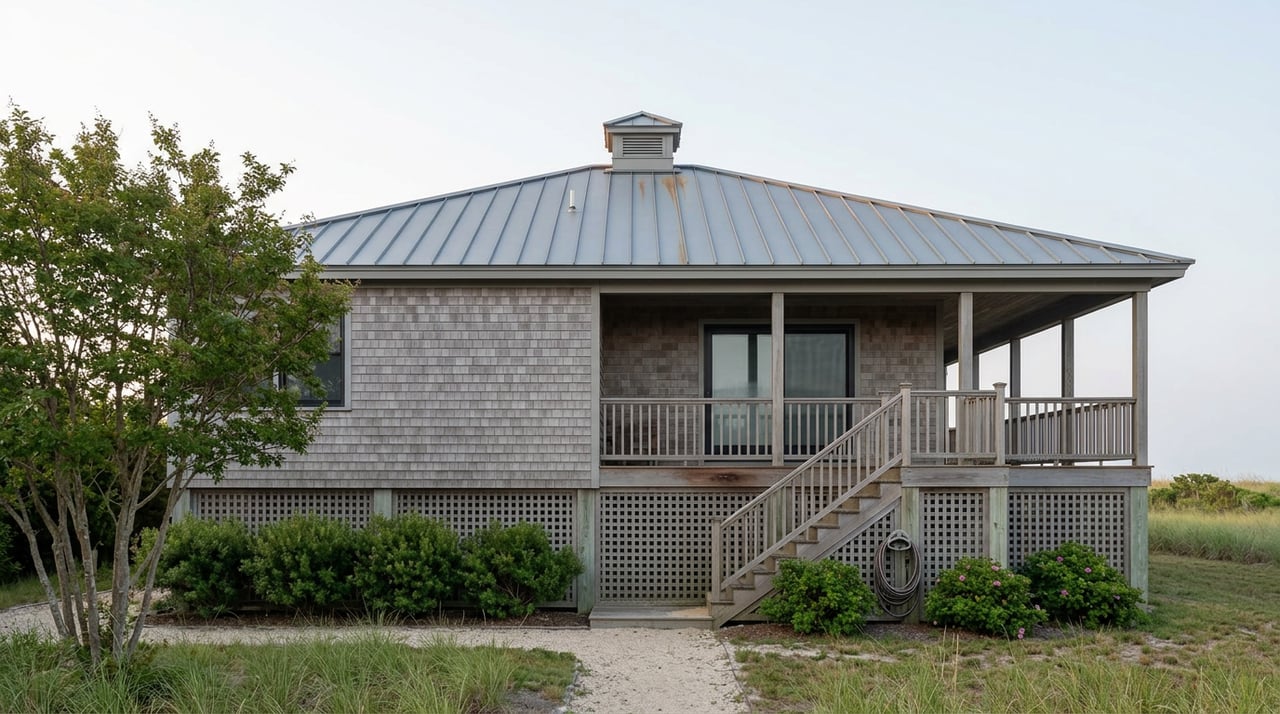
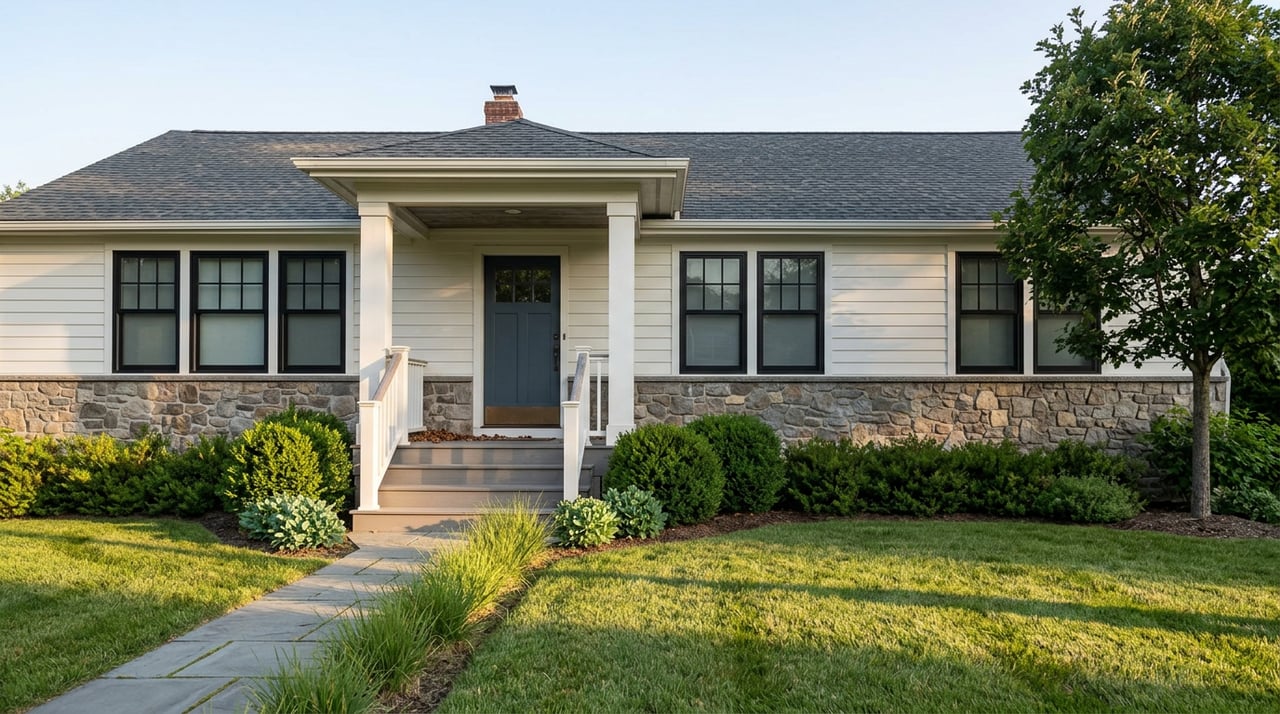
Here's the part that matters at the closing table: Middletown's own guidance is explicit that homes currently outside a FEMA flood zone can still fall inside this new Climate Adjusted Zone. So a raised ranch in Leonardo with a disclosure sheet that says "not in a flood zone" can still trigger the four-foot requirement the moment someone plans a substantial renovation or a rebuild.
Regulators set a compliance cutoff of July 20, 2026, for permits already in the pipeline. Anything NJDEP considered administratively complete on or before that date gets reviewed under the old standard. Anything filed after has to meet the new one. That window has already closed, which means any Bayshore renovation or new build moving through permitting today is working under the stricter rule, full stop.
This is the calculation a buyer needs to run before falling in love with a fixer-upper near the water: the zone status on the listing sheet tells you about today's flood map, not about what it costs to substantially improve that house tomorrow.
The Insurance Patch That Just Moved Again
The National Flood Insurance Program has never gone more than a few years without needing Congress to renew its authority, and lately it hasn't gone more than a few months. Since the end of fiscal year 2017, Congress has reauthorized it on a short-term basis 35 separate times, with five outright lapses in that stretch.
| Date | What happened |
|---|---|
| January 30, 2026 | NFIP lapses during Winter Storm Fern after Congress misses the deadline |
| February 3, 2026 | President signs a short-term extension to September 30, 2026, the 35th patch since FY2017 |
| September 2, 2026 | House passes a continuing resolution that would fund the government through December 11 and extend NFIP a 36th time |
That last line is where this gets relevant to anyone with a closing on the calendar. As of this writing, the House measure had passed but full enactment was still working through Congress ahead of the September 30 deadline. If it holds, the practical deadline for NFIP shifts from the end of this month to December 11. If it doesn't, Bayshore Middletown is looking at another lapse in the exact window when fall closings tend to cluster.
Nationally, FEMA and the National Association of Realtors have estimated that a lapse can affect roughly 1,300 property sales a day and close to 40,000 closings a month, because federally backed lenders require flood insurance for any property in a Special Flood Hazard Area, and NFIP can't issue new or renewed policies during a lapse. Port Monmouth, Belford, and Leonardo sit in AE and VE zones along the Raritan Bay, which is exactly the kind of geography that mechanic hits.
There is a workaround worth knowing if you're on either side of a deal timed near that deadline. During a lapse, an insurer can assign the seller's existing NFIP policy to the buyer by substituting the name on the policy, so coverage stays in place without a new policy having to be issued. It's not automatic and it depends on your lender and carrier, but it's the difference between a deal that stalls and one that closes on schedule.
Middletown does have one thing working in its favor here. The township participates in FEMA's Community Rating System and holds a Class 7 rating, which gets NFIP policyholders in the Special Flood Hazard Area a 15 percent discount on premiums, and properties outside the SFHA a 5 percent discount. That's real money over the life of a policy, and it's a rating Middletown earned by taking floodplain management steps beyond the federal minimum. It doesn't insulate anyone from a program-wide lapse, but it does mean the baseline cost of coverage here is already better than it would be in a town without that rating.
What Two Decades of Construction Is Actually Buying Port Monmouth
The Mercantante quote at the top of this piece is about a levee from the 1970s, but the reason Middletown has a CRS Class 7 rating today traces back to a much bigger, much slower project still underway. The Army Corps of Engineers has been building the Port Monmouth Storm Risk Reduction Project for more than a decade, part of a roughly $300 million regional coastal resilience effort expected to wrap up in 2028. When finished, it will include about 7,070 feet of levees, 3,585 feet of floodwalls, 2,640 feet of dune, and beach renourishment at ten-year intervals along the Raritan and Sandy Hook Bay shorelines.
That work is visible right now, not just on a project timeline. A half-mile stretch of the Henry Hudson Trail in Port Monmouth, between Wilson Avenue and Church Street, closed on July 6, 2026, for the next two years while crews build a floodwall and levee system along Route 36 to Broadway and a second floodwall and pumping station along Main Street. The detour adds a little over a mile for walkers and cyclists. It's a genuine inconvenience, and it's also a sign that the mitigation infrastructure behind those insurance discounts is still being poured.
The most recent contract in that sequence, valued near $62 million, was awarded to Anselmi & De Cicco of Maplewood and is expected to finish in December 2026. That's real progress. It's also a reminder that the flood protection Port Monmouth is buying isn't finished yet, which matters for anyone weighing today's insurance costs against what this stretch of the Bayshore will look like once the full project closes out in 2028.
What This Means Before You Go To Contract
A few concrete steps, in order:
- Pull the actual elevation certificate for the property rather than relying on the zone checkbox on the disclosure form. Middletown has uploaded more than 600 FEMA elevation certificates to its Forerunner platform, and that number is the one that determines your real premium exposure, not the zone letter alone.
- If you're planning any substantial renovation or rebuild, ask specifically whether the Tidal Climate Adjusted Flood Elevation applies to the parcel, even if the current FEMA zone says you're clear. That four-foot requirement changes construction cost math in a way a standard home inspection won't catch.
- If your closing is scheduled between now and December 11, ask your lender in advance whether a policy assignment is available as a fallback if Congress lets NFIP lapse again before the extension is finalized.
- Confirm the seller has completed New Jersey's flood disclosure requirements under the 2023 law, which requires sellers and landlords to make specific notifications about a property's flood history before the deal moves forward.
A Few Questions Worth Asking Early
If my flood zone box says "no," do I still need to worry about any of this? Being outside a mapped Special Flood Hazard Area generally means a lender won't require flood insurance as a condition of the loan. It does not mean the Tidal Climate Adjusted Flood Elevation is off the table if you plan to substantially renovate or rebuild, since that layer is a construction standard, not an insurance mandate, and it can apply regardless of your current zone status.
What actually happens to my closing if NFIP lapses again before December 11? Existing policies stay in force through their term, including a standard grace period, and claims continue to be paid as funds allow. What stops is the ability to issue new or renewal policies, which is where the seller-to-buyer name substitution can keep a deal moving.
Does Middletown's CRS discount apply the same way everywhere in town? No. The 15 percent discount applies to standard policies inside the Special Flood Hazard Area, while properties outside it get 5 percent. Both come from the same township-wide Class 7 rating, but the size of the benefit depends on where the specific parcel sits.
None of this is a reason to avoid the Bayshore. It's a reason to ask sharper questions before you write an offer or sign a listing agreement, and to work with someone who's tracking both the federal calendar and the state rulebook in real time. If you're weighing a move in Port Monmouth, Belford, or Leonardo, or you're a current owner wondering what these changes mean for your own timeline, Doreen DeMarco can walk through the specifics with you, starting with a free home valuation that accounts for exactly where your property sits in all of this.